
On-Demand CE Training
EP 330: Growing Through Grief: The LIGHT Movement
Please make sure to check with your own state board to ensure the transferability of CE credit for an asynchronous course. Some state boards may place restrictions regarding the modality of training required for ethics credits to be awarded. If this training indicates ethics credits are available, please verify that your state allows them to be earned through an on-demand course format.
1 CREDIT HOUR APPROVED FOR:
Social Workers
ASWB ACE – 1 Clinical Continuing Education Credit
New York State Education Department’s State Board for Social Work- 1 Contact Hour
Psychologists
APA – 1 CE Credit
Counselors
NBCC ACEP – 1 Contact Hour
New York State Education Department’s State Board for Mental Health Practitioners- 1 Contact Hour
Addiction Professionals
NAADAC – This course is not approved for NAADAC contact hours.
Nurses
California Board of Registered Nursing – 1 Contact Hour
Case Managers
CCMC – This course is not approved for CCMC contact hours.
Important Notice: The podcast included in this continuing education course was originally published by Behavioral Health Today and is used with permission. Continuing education credit is available only through successful completion of the CEU Creations course requirements, including any required assessments or evaluations. Listening to the podcast through Behavioral Health Today or any other platform does not qualify for CE credit.
Created On: 10/9/26
Target Audience:
This course is targeted for social workers, psychologists, counselors, and nurses.
Instructional Level:
Beginner
Overview:
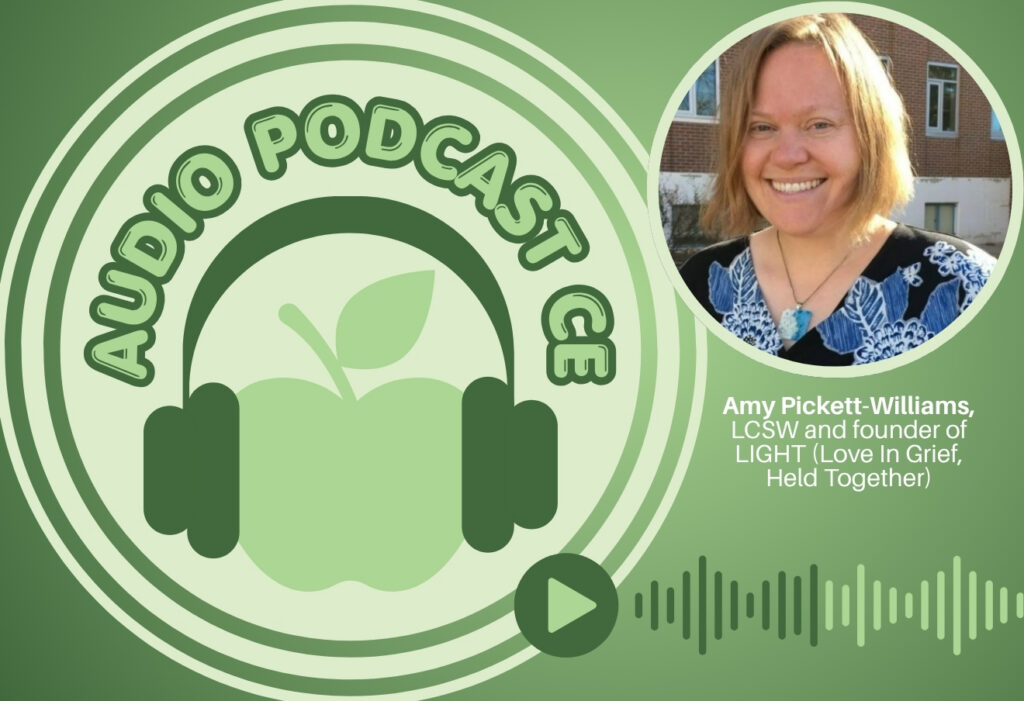
This continuing education course explores contemporary approaches to understanding and supporting grief through the discussion presented in the Behavioral Health Today episode “Growing Through Grief: The LIGHT Movement with Amy Pickett-Williams, LCSW.” The episode features psychotherapist Amy Pickett-Williams, founder of LIGHT (Love In Grief, Held Together), whose work integrates grief counseling, trauma-informed practice, somatic approaches, creativity, and community connection.
Participants will examine grief as a multidimensional experience affecting the mind, body, relationships, and sense of meaning. The course highlights the potential role of body-based and somatic interventions in helping individuals recognize and regulate physiological responses associated with loss. It also considers the importance of social connection, shared experience, and creative expression in facilitating adaptation following bereavement and other significant losses. Particular attention is given to moving beyond an exclusively symptom-focused model of grief toward approaches that recognize continuing bonds, meaning-making, resilience, and opportunities for personal growth.
Outline:
- Understanding Grief as a Multidimensional Experience
- Emotional and Physiological Responses to Loss
- The LIGHT Movement and Its Approach to Grief Support
- Somatic and Body-Based Strategies for Grief
- Creative Expression and Meaning-Making
- The Role of Connection and Community
- Resilience, Continuing Bonds, and Personal Growth
- Clinical Applications for Supporting Grieving Clients
Course Objectives:
By the end of the session, the participant will be able to:
- Describe the psychological, physiological, relational, and emotional dimensions of grief and their implications for clinical practice.
- Identify somatic, creative, and relational strategies that may be incorporated into therapeutic work with individuals experiencing grief and loss.
- Explain how connection, meaning-making, and community support can contribute to adaptation, resilience, and personal growth following significant loss.
Guest:
Amy Pickett-Williams, LCSW
Amy Pickett-Williams, LCSW, is a psychotherapist with more than 25 years of experience specializing in grief, trauma, and somatic therapy. She is the founder of LIGHT (Love In Grief, Held Together), a movement dedicated to collective healing, connection, and helping individuals grow through grief. Amy integrates mind-body approaches, creativity, and somatic practices into her work, drawing from both her professional expertise and personal experiences with grief. She is also a certified yoga instructor and has worked with clients across the lifespan in medical, school-based, and private practice settings.