
On-Demand CE Training
ODL 447: Self-Meaning Based Therapy®: Understanding Core Self-Meaning, Attachment, Trauma, and Experiential Change
Please make sure to check with your own state board to ensure the transferability of CE credit for an asynchronous course. Some state boards may place restrictions regarding the modality of training required for ethics credits to be awarded. If this training indicates ethics credits are available, please verify that your state allows them to be earned through an on-demand course format.
Please note: This on-demand webinar is a replay of a live CE event. The format reflects the original presentation and may include live Q&A, transitions, and intermittent audio/visual fluctuations typical of a live recording.
5 CREDIT HOURS APPROVED FOR:
Social Workers
ASWB ACE – 5 Clinical CE credits
Psychologists
APA – 5 CE credits
Counselors
NBCC ACEP – 5 Contact hours
New York State Education Department’s State Board for Mental Health Practitioners – 5 Contact hours
Addiction Professionals
NAADAC – This course is not approved for NAADAC contact hours.
Nurses
California Board of Registered Nursing – This course is not approved for nursing contact hours.
Case Managers
CCMC – This course is not approved for CCMC CE contact hours.
Created On: 11/4/2026
Target Audience:
This course is targeted for social workers, psychologists, and counselors.
Instructional Level:
Intermediate
Overview:
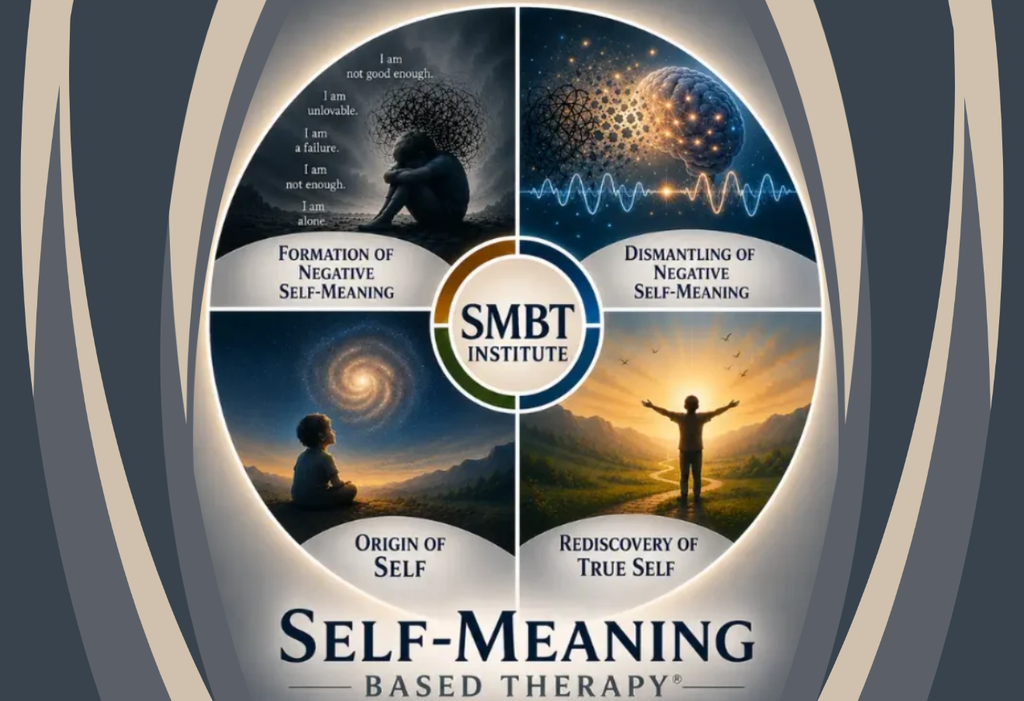
This 5-hour training introduces Self-Meaning Based Therapy® (SMBT) as a clinical framework for understanding how early attachment experiences, trauma, relational patterns, and unconscious meaning-making contribute to the development of core negative self-meaning. Participants will explore how emotionally salient experiences may become internalized as identity-based conclusions, shaping perception, emotional regulation, interpersonal functioning, compensatory strategies, and symptom presentation across the lifespan.
The training will examine the theoretical foundations of SMBT, including attachment theory, developmental psychology, unconscious and primary-process experience, trauma-related neural encoding, and the role of bilateral stimulation in accessing nonverbal, somatic, emotional, and symbolic aspects of self-experience. Participants will learn how SMBT differs from traditional talk therapy and EMDR, including its focus on enduring self-meaning rather than discrete traumatic memories or cognitive beliefs.
Clinical discussion will include appropriate client selection, limitations and contraindications, case conceptualization, identification of core negative self-meaning, and use of SMBT-informed narration to support therapeutic processing. Emphasis will be placed on ethical, trauma-informed, and clinically responsible application, including recognition of client readiness, scope of competence, and the need for further training before independent use of specialized SMBT interventions.
Course Objectives:
By the end of the session, the participant will be able to:
- Describe the theoretical foundations of Self-Meaning Based Therapy®, including the role of attachment, early relational experience, trauma, unconscious processing, and meaning-making in the development of core negative self-meaning.
- Identify common clinical presentations associated with negative self-meaning, including compensatory strategies, relational patterns, emotional reactivity, shame-based self-experience, and symptom patterns that may persist despite insight-oriented or cognitive interventions.
- Differentiate SMBT from traditional talk therapy and EMDR by explaining its clinical focus on enduring, relationally encoded self-meaning rather than solely on cognitive beliefs, symptom management, or discrete traumatic memories.
- Evaluate client readiness, clinical limitations, and contraindications for SMBT-informed work, including considerations related to psychosis, marked dissociation, active substance use, severe psychopathology, alexithymia, rigid cognitive processing, and limited reflective capacity.
- Apply introductory SMBT-informed case conceptualization strategies to identify potential core negative self-meaning, associated somatic/emotional/symbolic experiences, and compensatory patterns within a trauma-informed and ethically responsible treatment framework.
Presenter:
Dr. Lawrie Ignacio, PsyD
Dr. Lawrie Ignacio is a clinical psychologist, educator, and co-developer of Self-Meaning-Based Therapy® (SMBT) and Intensive Psychodynamic Couple Therapy (IPCT). Her work explores how implicit self-meaning, formed in early life, shapes identity, suffering, and relationships. Based in Honolulu, she teaches and mentors doctoral students while contributing to community care through the co-founding of Hawaiʻi’s first pro-bono virtual mental health clinic. She presents nationally and internationally.
Dr. Graham Taylor, PsyD
Dr. Graham Taylor is a clinical psychologist whose work integrates psychodynamic, humanistic, and trauma-informed approaches with neuroscience. He is co-developer of Self-Meaning-Based Therapy® (SMBT) and Intensive Psychodynamic Couple Therapy (IPCT). His work focuses on how implicit self-meaning organizes emotional and relational life, and how therapy can access these deeper layers. He teaches, consults, and contributes to professional dialogue through writing, speaking, and podcasting.