
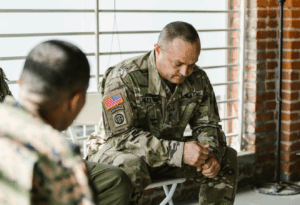
Military service is not just an occupation, it is a deeply ingrained culture that shapes identity, behavior, and help-seeking. Core values such as honor, discipline, loyalty, and a “mission-first” mindset promote resilience and cohesion but can also create barriers to mental health care.
Military populations experience mental health concerns at notably higher rates than civilians, shaped by both the nature of service and the challenges of reintegration. Since 9/11, approximately 3.3 million individuals have served, many of whom report service-connected disabilities and psychological distress.
Types of Trauma in Military Populations
While combat-related trauma is common in military populations, individuals may also experience trauma during training, deployment, or even reintegration into civilian life. This trauma often presents in more complex and layered ways than in non-military populations.
Common conditions include posttraumatic stress disorder (PTSD), depression, anxiety, substance use disorders, and traumatic brain injury (TBI). These conditions frequently co-occur, creating complex clinical presentations. Rather than appearing in isolation, symptoms often overlap; irritability, sleep disturbance, and concentration problems may reflect multiple underlying issues simultaneously.
Suicide risk is also significantly elevated. Veterans die by suicide at higher rates than non-veteran populations, influenced by factors such as chronic pain, access to firearms, isolation, and difficulty transitioning out of service.
Military Culture and Why It Matters
Service members are trained to be self-reliant, emotionally controlled, and focused on collective goals. Vulnerability is often discouraged, and seeking help may be perceived as weakness. This stigma can persist long after separation from service, influencing whether and how veterans engage in treatment.
Additionally, the hierarchical structure of the military can impact communication and trust. Veterans may be cautious with providers, particularly if they perceive a lack of cultural understanding. Some may minimize symptoms (“others had it worse”) or avoid disclosure altogether.
Family systems are also shaped by military culture. Spouses and children often internalize the same values, leading to delayed help-seeking, caregiver strain, and misinterpretation of symptoms (e.g., viewing hypervigilance as irritability or emotional withdrawal as disinterest).
For clinicians, cultural competence goes beyond knowledge of ranks or terminology – it involves understanding how these values influence coping, identity, and engagement. What may appear as resistance could actually be loyalty, training, or a learned survival strategy.
What Trauma Can Look Like in Military Populations
Symptoms in military populations may not present in stereotypical ways. Depression, for example, may manifest as anger, emotional numbing, or loss of purpose rather than sadness. Anxiety may appear as hypervigilance that once served a survival function. For helping professionals, recognizing these nuanced presentations is essential for accurate assessment and engagement.
Shame and isolation are prominent. Veterans may feel that civilians cannot understand their experiences, leading to withdrawal and difficulty connecting with others. Survivor’s guilt – feeling responsible for the injury or death of fellow service members – is also common.
Moral injury is another critical concept. This refers to the distress that arises when actions in service conflict with deeply held moral beliefs. Even when following orders, individuals may struggle with guilt, shame, and a fractured sense of identity.
Hypervigilance, once adaptive in combat, can persist in civilian life, manifesting as scanning environments, difficulty relaxing, or needing to sit facing exits in public spaces. Emotional numbing and dissociation may function as protective mechanisms but interfere with relationships and daily functioning.
TBI can further complicate the picture. Often invisible, it can affect memory, emotional regulation, and impulse control, and is frequently mistaken for noncompliance or lack of effort.
Understanding these presentations helps clinicians avoid mislabeling behaviors and instead interpret them through a trauma-informed lens.
Effective Treatment Options for Military Members
Effective treatment for military populations requires a trauma-informed, culturally responsive, and integrated approach. Evidence-based interventions are well-established and should be adapted to meet the unique needs of veterans.
Trauma-focused therapies are considered first-line treatments.
- Prolonged Exposure (PE) helps individuals gradually confront avoided memories and situations.
- Cognitive Processing Therapy (CPT) addresses maladaptive beliefs, particularly those related to guilt and moral injury.
- Eye Movement Desensitization and Reprocessing (EMDR) facilitates the processing of traumatic memories and reduces emotional intensity.
Complementary approaches are also essential.
- Cognitive Behavioral Therapy (CBT) supports the restructuring of unhelpful thoughts
- Behavioral Activation helps re-engage individuals in meaningful activities, which is particularly useful for depression and loss of purpose.
- Sleep-focused interventions, such as Cognitive Behavioral Therapy for Insomnia (CBT-I), are especially valuable given the high prevalence of sleep disturbance.
- Motivational Interviewing (MI) can enhance engagement and address ambivalence, particularly around substance use.
Equally important is the therapeutic stance. Direct, transparent communication often resonates with veterans and can build trust. Collaborative safety planning is critical when suicide risk is present, including identifying warning signs, coping strategies, and reducing access to lethal means.
Finally, interdisciplinary care is key. Given the high rates of comorbidity, coordination between mental health providers, medical professionals, and community resources enhances outcomes.
Closing Thought
Working with military populations requires more than clinical skills, it requires cultural humility, curiosity, and a willingness to understand experiences that may be far outside one’s own. When helping professionals meet veterans with compassion and informed care, they play a vital role in supporting healing, resilience, and reintegration.