
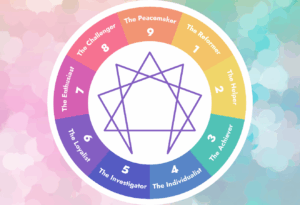
The Enneagram is a dynamic personality typing system that helps us understand why we think, feel, and behave the way we do. Like other personality tools, it identifies patterns, but what makes the Enneagram unique is that it invites growth. It not only highlights our dominant “ego type,” but encourages us to build empathy for ourselves and others, and avoid getting stuck in a label.
There are nine Enneagram types, each with its own motivations, fears, and strengths:
- Type 1 – The Reformer: Principled, organized, and motivated by doing what is right.
- Type 2 – The Helper: Caring and relational, driven by a desire to be loved and needed.
- Type 3 – The Achiever: Ambitious and success-oriented, focused on accomplishment and recognition.
- Type 4 – The Individualist: Creative and expressive, longing to be unique and authentic.
- Type 5 – The Observer: Curious and analytical, motivated by gaining knowledge and competence.
- Type 6 – The Loyalist: Loyal and cautious, seeking security and support.
- Type 7 – The Enthusiast: Energetic and fun-loving, motivated by new experiences and possibilities.
- Type 8 – The Boss: Assertive and protective, driven by control and justice.
- Type 9 – The Peacemaker: Easygoing and harmonious, motivated by peace and avoiding conflict.
Using the Enneagram to Better Understand Clients
Understanding a client’s Enneagram type can offer insight into their core fears and motivations. Take Type 6 – The Loyalist, for example. Sixes are motivated by safety and security, and fear having no support or being unable to survive on their own. They are often described as cautious, loyal, and hardworking.
In practice, a Type 6 client may present with chronic anxiety or worst-case-scenario thinking. Rather than viewing this solely as pathology, the Enneagram reframes it as a strategy for creating safety. Fear is the central struggle for a Type 6. Recognizing this can guide interventions, emphasizing predictability in sessions, collaboratively creating safety plans, and reinforcing their strengths in loyalty and preparedness. Instead of challenging their anxiety head-on, we might help them build courage gradually, affirming that they are secure and supported.
This shift from “Why are they so anxious?” to “How is anxiety serving their need for safety?” deepens empathy and improves therapeutic rapport.
Using the Enneagram to Communicate with Coworkers
The Enneagram can also transform workplace dynamics. Consider Type 3 – The Achiever. Threes are guided by success and ambition, and appreciate concise communication and recognition for their work.
If you’re collaborating with a Type 3 coworker, long emotional processing meetings may frustrate them. They value efficiency and clear feedback. For example, if you need to offer feedback to a Type 3 team member, frame it in terms of performance and growth: “Here’s one adjustment that will make your presentation even stronger.” Publicly recognizing their contributions can go a long way. Understanding their motivation – fear of failure and desire for success – helps you tailor communication in a way that energizes rather than deflates them.
Using the Enneagram to Help Guide Children
The Enneagram can also provide powerful insight into children’s inner worlds. For example, Type 9 – The Peacemaker is motivated by harmony and fear disconnection or conflict. Their unconscious inner voice is often “It’s not okay to be assertive,” and what they most need to hear is “Your presence matters.”
A child with strong Type 9 tendencies might avoid speaking up, defer to siblings, or say, “I don’t care” when asked what they want. Instead of interpreting this as passivity or lack of interest, we can see it as a strategy to maintain peace.
Parents and caregivers can intentionally create space for this child’s voice by asking open-ended questions, gently encouraging opinions, and affirming that their needs are important. Over time, reinforcing the message that their presence matters can help them develop confidence and healthy assertiveness.
Putting it Into Practice
The Enneagram can absolutely be something you explore for yourself, just for fun and/or self-reflection. It can spark meaningful conversations and deepen your understanding of your own patterns. However, no test is perfectly precise, and discovering your type is a process of discernment.
If you plan to use the Enneagram in your professional practice, it’s essential to study it deeply. The goal is not to put clients in a box or reduce them to a number. Instead, the Enneagram should serve as a compassionate guide, offering insight into motivations, highlighting growth paths, and informing therapeutic strategies. At its best, the Enneagram helps us do exactly what it was designed to do: build empathy, foster growth, and allow people to become more fully themselves.