
Each May, Mental Health Awareness Month invites us to pause and reflect, not only on the importance of mental well-being but on how far the field itself has come. What we now call “mental health” is the product of centuries of evolving beliefs, scientific breakthroughs, social reform, and professional development.
Today’s mental health industry – encompassing therapists, social workers, psychologists, and case managers, and more – is built on a long and often complicated history. Understanding that history provides valuable context for the work helping professionals do today and for where the field may be heading next.
When Did “Mental Health” Become a Concept?
The idea of mental health did not emerge overnight. Instead, it developed gradually over thousands of years as humans attempted to understand behavior, emotion, and suffering.
From Supernatural to Scientific
In ancient civilizations, mental illness was often attributed to supernatural forces such as demonic possession or divine punishment (Nasser, 2020). These beliefs shaped early interventions, which ranged from rituals and exorcisms to confinement.
A meaningful shift began in ancient Greece. Hippocrates proposed that mental disorders had natural, physical causes rather than supernatural ones, suggesting imbalances in bodily fluids as an explanation (Porter, 2002). While not scientifically accurate by modern standards, this perspective helped lay the groundwork for medical approaches to mental illness.
Still, for much of history, care remained inconsistent and often inhumane. Early institutions, including asylums, were intended to house individuals with mental illness but frequently lacked effective treatment and humane conditions (Scull, 2015).
The Birth of “Mental Hygiene”
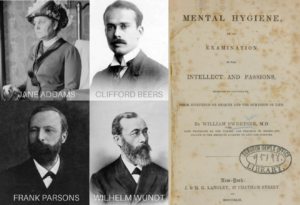
The modern concept of mental health began to take shape in the 19th century. Physician William Sweetser is credited with introducing the term “mental hygiene” in 1843, emphasizing prevention and the maintenance of psychological well-being (Jorm, 2012).
Reformers such as Dorothea Dix advocated for more humane treatment and improved conditions in mental health facilities, leading to the expansion of state-supported hospitals across the United States (Parry, 2006).
By the early 20th century, the mental hygiene movement had gained momentum. Clifford Beers, drawing from his own experiences as a psychiatric patient, helped promote community-based care, early intervention, and public education about mental health (Jorm, 2012).
The Rise of Modern Mental Health
Following World War II, the language of “mental health” began to replace “mental hygiene,” reflecting a broader focus on overall well-being rather than solely the prevention of illness (World Health Organization [WHO], 2001).
The mid-20th century also brought greater standardization to diagnosis and treatment. The Diagnostic and Statistical Manual of Mental Disorders (DSM), first published in 1952, created a shared framework for understanding mental health conditions, though it has continued to evolve alongside new research (American Psychiatric Association [APA], 2013).
At the same time, deinstitutionalization shifted care away from large psychiatric hospitals toward community-based services. While this movement increased autonomy for many individuals, it also revealed gaps in community resources that are still being addressed today (Lamb & Bachrach, 2001).
Today, mental health is commonly understood through a biopsychosocial framework, which recognizes the interaction between biological, psychological, and social influences (Engel, 1977).
Origins of Helping Professions
As the concept of mental health evolved, so too did the professions dedicated to supporting it. Each role emerged in response to specific societal needs and historical contexts.
Social Workers
Social work has its roots in 19th-century social reform movements, particularly in response to poverty and the challenges of industrialization. Early efforts focused on charity and moral guidance through organizations such as the Charity Organization Societies.
At the same time, the settlement house movement, led by figures like Jane Addams, emphasized community-based support and social justice. Settlement houses provided education, healthcare, and social services within underserved neighborhoods (Addams, 1910/2002).
By the early 20th century, social work began to intersect more directly with mental health. Psychiatric social work emerged as practitioners worked alongside physicians to address the environmental and social factors affecting mental illness (Stuart, 2014).
Today, social workers play a central role in mental health care, offering therapy, advocacy, and systems-level support across diverse settings.
Counselors
The counseling profession began in the early 20th century with a focus on vocational guidance. Frank Parsons, considered a founder of vocational guidance, developed frameworks to help individuals make informed career decisions during a time of rapid economic change (Parsons, 1909). Over time, counseling expanded beyond vocational concerns to include educational and personal development. The mental hygiene movement and the rise of community mental health centers in the mid-20th century further increased demand for trained counselors (Gladding, 2018).
By the late 20th century, counseling had become a distinct profession with formal licensure, ethical standards, and specialized training. Today, counselors work across a wide range of settings, addressing mental health, career development, and life transitions.
Case Managers
Case management developed largely in response to deinstitutionalization and the increasing complexity of community-based care systems. As individuals transitioned out of long-term psychiatric hospitals, there was a growing need for coordination across services such as housing, healthcare, and employment. Case managers emerged to help individuals navigate these systems, ensuring continuity of care and access to resources. This role became especially important for individuals with chronic or severe mental health conditions (Intagliata, 1982).
Today, case management is an essential function within many helping professions, focused on reducing fragmentation and supporting holistic care.
Psychologists
Psychology as a formal discipline began in the late 19th century, with Wilhelm Wundt establishing the first experimental psychology laboratory in 1879 (Schultz & Schultz, 2016). This marked a shift toward scientific study of the mind and behavior.
Clinical psychology developed soon after, with early practitioners focusing on assessment and diagnosis. Over time, theoretical approaches such as psychoanalysis, behaviorism, and cognitive psychology shaped the field’s understanding of mental health.
Following World War II, psychologists took on expanded roles in therapy, research, and program development. Today, they contribute to mental health care through evidence-based treatment, psychological assessment, and ongoing research.
The Future of Helping Professions in a Digital World
As we look ahead, the mental health field is entering a new phase, one shaped by technology, social media, and evolving cultural attitudes.
The Promise of Connection
Digital platforms have expanded access to mental health information and support. Telehealth, in particular, has become a widely used modality, especially following the COVID-19 pandemic. Research suggests that teletherapy can be as effective as in-person care for many conditions, while also reducing barriers such as transportation and stigma (Wind et al., 2020).
Social media has also created spaces for individuals to share experiences and build community, increasing awareness and reducing isolation.
The Risk of Disconnection
With promise comes risk: Increased digital engagement can contribute to anxiety, comparison, and misinformation. Studies have linked heavy social media use with increased risk of depression and psychological distress, particularly among younger populations (Keles et al., 2020). For helping professionals, the digital landscape introduces additional challenges, including blurred boundaries, ethical considerations, and the spread of unverified mental health advice.
A Hybrid Future
The future of mental health care will likely involve a hybrid model that integrates digital and in-person approaches. Helping professionals may need to develop new competencies in digital communication, ethics, and media literacy. At its best, technology can enhance access and connection – but it cannot replace the human relationships at the core of effective mental health care.
Final Thoughts
The mental health field has evolved from superstition and stigma to science and compassion but its development has never been linear. Each era has brought new insights, new professions, and new challenges. For today’s helping professionals, this history offers both perspective and responsibility. It highlights the importance of adapting to new knowledge while remaining grounded in empathy and ethical care.
As we observe Mental Health Awareness Month, it may be helpful to view the field not as a finished product, but as an ongoing process, one that continues to evolve alongside the needs of the people it serves.
References
Addams, J. (2002). Twenty years at Hull-House. University of Illinois Press. (Original work published 1910)
American Psychiatric Association. (2013). Diagnostic and statistical manual of mental disorders (5th ed.).
Engel, G. L. (1977). The need for a new medical model: A challenge for biomedicine. Science, 196(4286), 129–136. https://doi.org/10.1126/science.847460
Gladding, S. T. (2018). Counseling: A comprehensive profession (8th ed.). Pearson.
Intagliata, J. (1982). Improving the quality of community care for the chronically mentally disabled: The role of case management. Schizophrenia Bulletin, 8(4), 655–674.
Jorm, A. F. (2012). Mental health literacy: Empowering the community to take action for better mental health. American Psychologist, 67(3), 231–243.
Keles, B., McCrae, N., & Grealish, A. (2020). A systematic review: The influence of social media on depression, anxiety and psychological distress in adolescents. International Journal of Adolescence and Youth, 25(1), 79–93.
Lamb, H. R., & Bachrach, L. L. (2001). Some perspectives on deinstitutionalization. Psychiatric Services, 52(8), 1039–1045.
Nasser, M. (2020). The history of mental health. In Mental health and illness: A historical perspective. Springer.
Parry, M. (2006). Dorothea Dix (1802–1887). American Journal of Public Health, 96(4), 624.
Parsons, F. (1909). Choosing a vocation. Houghton Mifflin.
Porter, R. (2002). Madness: A brief history. Oxford University Press.
Schultz, D. P., & Schultz, S. E. (2016). A history of modern psychology (11th ed.). Cengage Learning.
Scull, A. (2015). Madness in civilization: A cultural history of insanity. Princeton University Press.
Wind, T. R., Rijkeboer, M., Andersson, G., & Riper, H. (2020). The COVID-19 pandemic: The ‘black swan’ for mental health care and a turning point for e-health. Internet Interventions, 20, 100317.
World Health Organization. (2001). Mental health: New understanding, new hope. WHO.