
Saturday morning, I headed out for my usual morning exercise, a five to six-mile walk/jog through the trails and paseos near my home.
It is a routine I enjoy. It gives me time to exercise, clear my head and explore the miles of trails that wind through our community.
But this particular Saturday was different.
As I made my way down one of the trails, I began noticing signs posted every 50 yards or so. Each offered a simple message of encouragement and affirmation.
“You matter,” “You are not alone,” “You are strong”
I actually stopped several times to take pictures of them. There was something powerful about encountering these messages one after another on an otherwise ordinary Saturday morning.
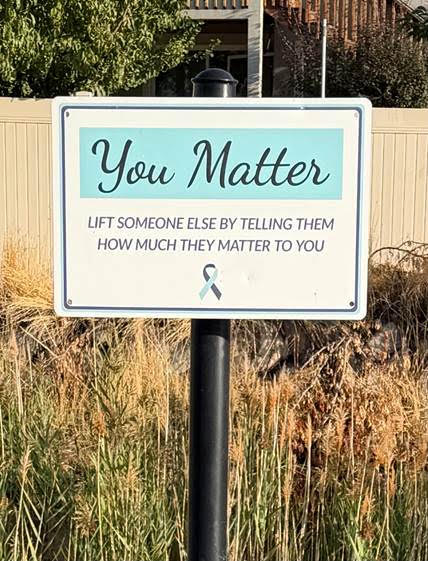
One of the signs I encountered on my morning jog along Herriman’s Trail of Hope.
I later learned that I had stumbled onto the Trail of Hope, a section of the Midas Creek Trail in Herriman, Utah, created with the involvement of students from Herriman High School’s Peer Leadership Team and Hope Squad. The effort grew out of a particularly difficult period in which the community had been deeply affected by student suicides. Students and community members came together to create a place centered not on loss, but on hope, connection and mental health support.
I found myself thinking about those signs long after I finished my walk.
Perhaps it affected me so strongly because suicide prevention is not simply an issue I know about professionally. For me, like far too many, it’s personal.
When the Issue Becomes Personal
Years ago, when my child was a young adolescent, our family found ourselves confronting this issue in a very personal and frightening way.
As a parent, there are few things more unsettling than realizing that your child may be struggling with something you cannot simply fix for them.
Parents spend so much of our children’s early lives solving problems. They fall down, we pick them up. Something breaks, we repair it. They are frightened, we reassure them.
Mental health does not always work that way.
Sometimes love alone is not enough. Sometimes good intentions are not enough. Sometimes a family needs someone with the training and experience to step into an incredibly difficult moment and help a young person, and the people who love them, find a path forward.
That experience changed the way I think about mental health care. It also changed the way I think about the people who provide it.
Today, I have the privilege of belonging to an organization whose mission is Helping Those Who Help Others. Through CE4Less, CEU Creations, AATBS, NurseCE4Less and the other organizations within Level Education Group, we support hundreds of thousands of nurses, social workers, counselors, psychologists, therapists, and other behavioral health professionals.
For me, that mission will never be an abstract corporate statement.
I know what it feels like to be the parent who needs you.
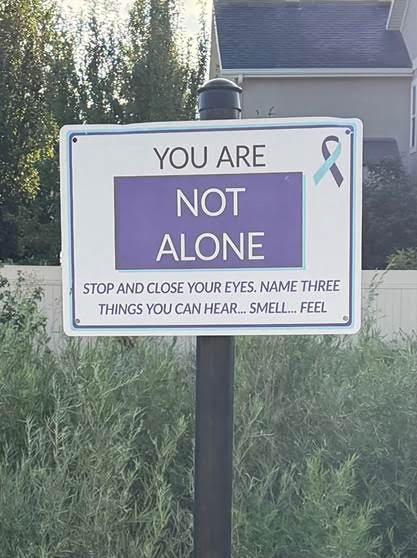
A simple message with an essential reminder: You are not alone.
The Need Remains Enormous
September is National Suicide Prevention Month – a time to increase awareness, encourage connection and remind people that suicide is preventable.
The scope of the challenge remains sobering. In 2024, 48,824 people in the United States died by suicide. The Centers for Disease Control and Prevention reports that suicide remains a leading cause of death in the United States and affects people across ages, families and communities.
But statistics tell only part of the story.
Behind every number is a person, a son or daughter, a spouse, a parent, a friend, a student.
And surrounding each of those individuals are people desperately hoping to recognize the signs, find the right words, connect them with help and remind them that their story is not over.
That is one of many reasons why the work of mental and behavioral health professionals matters so much.
Sometimes Hope Looks Remarkably Ordinary
One thing struck me about the Trail of Hope: there was nothing complicated about the messages.
“You Matter,” “You are loved,” “You are not alone”
Yet those simple ideas are incredibly powerful.
The CDC emphasizes that suicide prevention extends far beyond intervening during a moment of crisis. Connection to family and community, access to health care, supportive environments and other protective factors can all help reduce suicide risk.
That means prevention happens in countless places.
It happens in a therapist’s office. It happens when a school counselor notices that a student has changed. It happens when a social worker asks one more question. It happens when a parent decides not to dismiss something as ‘just a phase’. It happens when a friend checks in again.
And sometimes it happens on a walking trail, where a teenager helped put up a sign reminding a complete stranger that they matter.
We may never know which conversation, which professional, which friend, or which sign, reaches someone at exactly the moment they need it.
That does not make those moments insignificant. It makes them essential.
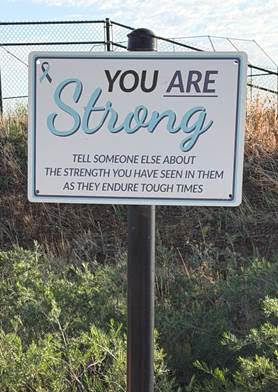
You are strong.
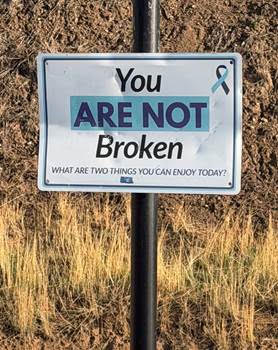
You are not broken.
To Those Who Do This Work: Thank You
During National Suicide Prevention Month, much of the attention appropriately focuses on those who are struggling and on helping people recognize when someone may need support.
I also want to recognize the people who have chosen careers dedicated to providing that support.
To the nurses, counselors, psychologists, social workers, marriage and family therapists, addiction professionals and all other behavioral health providers reading this:
Thank You!
Thank you for sitting with people during moments most of us will never see.
Thank you for asking difficult questions.
Thank you for listening when the answers are not easy.
Thank you for continuing to learn, train and improve your skills.
Thank you for helping families navigate situations they never imagined they would face.
And thank you for doing work whose impact you may not always get to see.
There is a family somewhere that remembers the professional who helped their child.
I know, because mine is one of them.
Keep Putting Up the Signs
As I continued down the Trail of Hope Saturday morning, I found myself looking forward to seeing the next sign.
One message after another, one small reminder after another…
And I thought about how fitting that is for the work of suicide prevention.
There is no single sign, conversation, intervention or person capable of solving this challenge.
Instead, we keep showing up. We keep talking about mental health. We keep reducing stigma. We keep improving access to care. We keep training professionals. We keep checking on people. We keep reminding people that asking for help is an act of strength.
And we keep putting up signs, literal and figurative, that say:
“You matter,” “You are loved,” “There is help,” “There is hope”
To everyone doing this work, and to everyone who has ever needed that message, that is worth remembering…not only during National Suicide Prevention Month, but every day.
If you or someone you know needs emotional support or is experiencing a suicidal crisis, call or text 988, or chat through the 988 Suicide & Crisis Lifeline. Support is available 24/7.