
CEU Creations
Log In / Sign Up
  • Unlimited CE Bundle
  • CE Trainings
    • Livestream CE Webinars
    • Video-On-Demand CE Trainings
    • Free CEs!
    • My Event Registrations
    • State Requirements
    • Accreditations
  • Certification Programs
  • Bundle Member Resources
  • Marketers/Sponsors
    • Overview
    • CE Coupon Options
    • Watch Parties
    • Sponsor Partners
  • Blog
  • FAQs
  • Log In / Sign Up
  • My Profile
  • Logout
  • Search

Testing Zoom! 4/1/25

April 1, 2025 by Jess W

Filed Under: Uncategorized

ODL 331: Who’s in the Family?

March 25, 2025 by Nicole Errickson

Please make sure to check with your own state board to ensure the transferability of CE credit for an asynchronous course. Some state boards may place restrictions regarding the modality of training required for ethics credits to be awarded. If this training indicates ethics credits are available, please verify that your state allows them to be earned through an on-demand course format.

1 CREDIT HOUR APPROVED FOR:

Social Workers
ASWB ACE – 1 Clinical CE Credit
New York State Education Department’s State Board for Social Work – 1 Contact Hour
Psychologists
APA – 1 CE Credit
Counselors
NBCC ACEP – 1 Contact Hour
Addiction Professionals
NAADAC – 1 Contact Hour
Nurses
California Board of Registered Nursing – 1 Contact Hour
New York State Education Department’s State Board for Mental Health Practitioners – 1 Contact Hour
Case Managers
CCMC – 1 Contact Hour

Created On: 3/26/25 Revised On: 12/29/25

Target Audience:

This course is targeted for social workers, psychologists, counselors, nurses and case managers.

Counselor Skill Groups: 

4. Counseling Services

Overview:

As clinicians, we often realize the importance of other family members in supporting the health and wellbeing of our patients. This session is focused on understanding and identifying strategies to both leverage and overcome family dynamics. During this training, Dr. Bonds Johnson will share research, lived experiences, and case studies with the attendees as we identify who’s in the family.

Course Objectives:

By the end of the session, the participant will be able to:

  • Examine how family systems research can influence clinical practice experiences.
  • Identify how to overcome negative family dynamics to improve the care of their patients. 
  • Describe which family dynamics to leverage to support positive outcomes in their patients.

Presenter:

Kalisha Bonds Johnson, PhD, RN, PMHNP-BC

Dr. Kalisha Bonds Johnson is an assistant professor at Emory University’s Nell Hodgson Woodruff School of Nursing in Atlanta, Georgia, and a psychiatric mental health nurse practitioner at Emory University’s Integrated Memory Care, a primary care clinic tailored to the care of persons living with dementia and their families. She is also the Principal Investigator of the DECIDE Research Lab. She graduated from The University of Tennessee at Martin with a Bachelor of Science in Nursing, graduated with a Master of Science in Nursing from Vanderbilt University, and graduated with a PhD from Oregon Health & Science University. She completed her postdoctoral training (or training after completing a PhD) at Emory University. Dr. Bonds Johnson’s research focuses on improving health care decision-making processes for Black American persons living with dementia and their family care partners as well as improving the communication between primary care providers and these families. 

Filed Under: 1 Hour On-Demand Training, VOD Courses Tagged With: On-Demand

Zoom Test

March 24, 2025 by Jess W

Filed Under: Uncategorized

ODL 330: Demystifying Counseling Immigrants in the U.S.

March 18, 2025 by Nicole Errickson

Please make sure to check with your own state board to ensure the transferability of CE credit for an asynchronous course. Some state boards may place restrictions regarding the modality of training required for ethics credits to be awarded. If this training indicates ethics credits are available, please verify that your state allows them to be earned through an on-demand course format.

1 CREDIT HOUR APPROVED FOR:

Social Workers
ASWB ACE – 1 Cultural Competence CE Credit
New York State Education Department’s State Board for Social Work – 1 Contact Hour
Psychologists
APA – 1 CE Credit
Counselors
NBCC ACEP – 1 Contact Hour
Addiction Professionals
NAADAC – 1 Contact Hour
Nurses
California Board of Registered Nursing – 1 Contact Hour
New York State Education Department’s State Board for Mental Health Practitioners – 1 Contact Hour
Case Managers
CCMC – 1 Contact Hour

Created On:  3/18/25                    Revised On: 12/30/25

Target Audience:

This course is targeted for social workers, psychologists, counselors, nurses and case managers.

Counselor Skill Groups: 

4. Counseling Services

Overview:

When individuals migrate to the United States, they do so in search for better opportunities or to escape persecution and dangers in their home country. Some may have supportive family or friends who already reside in the U.S. and know the lay of the land, while others are left to figure it out on their own. Quality of life for immigrants may be poor due to the lack of community resources and support (Garcini, et al., 2017). Finding a place to live, a place of employment, schools for their children, and focusing on their academic experience at universities can be difficult without someone to guide them. Employment opportunities are limited without proper language skills, education, status to work, or social connections. Acculturation can create identity confusion. Children may feel torn between following the family’s cultural values and the values of the country in which they now live. Additionally, acculturation can be accompanied by prejudice and discrimination making it difficult to adapt and causing mental health issues (Panjwani, 2020). On the other hand, acculturation can be positive if immigrants are educated, supported, and accepted by those around them (Fiske, et al., 2010). It can allow them to be tolerant of different cultures and be open to learning and experiencing the best of both worlds. Mental health professionals can better support the immigrant population by incorporating cultural responsiveness. Advocacy for resources and policy changes could also lead to better well-being for this population.

Course Objectives:

By the end of the session, the participant will be able to:

  1. Identify misperceptions and myths about immigrants in the U.S, review immigration trends in the U.S., and understand common mental health issues faced by immigrant clients.
  2. Examine cultural considerations and ways to effectively work with immigrants in counseling.
  3. Discuss ethical considerations and implications of working with immigrant clients.

Presenter:

Shama Panjwani, PhD, LPC, ACS, NCC, CCMHC

Dr. Shama Panjwani is an Asian Indian speaker and expert in trauma-informed care, focusing on attachment, immigration, cultural/racial, and intergenerational traumas while integrating holistic wellness approaches to addressing trauma in a culturally competent manner. She is currently a professor in the clinical mental health counseling program at Keiser University. Dr. Shama has a private practice, SoHolisticEnergy Counseling & Consultation, LLC, where she provides clinical services to clients and supervisees. She also provides consulting services to organizations and institutions on Diversity, Equity, and Inclusivity (DEI) and Workplace Wellness.

Dr. Shama has a Ph.D. in counselor education and supervision with a specialization in Cross-Cultural Psychology and Organizational Leadership. She is a national certified counselor, a certified clinical mental health counselor, a board certified telemental health provider, licensed professional counselor and an approved clinical supervisor. 

Her research presentations and publication focus on topics such as: reducing mental health stigma, immigration, acculturation, trauma, social justice and advocacy, multiculturalism and diversity, psychedelic-assisted therapy, crisis counseling, as well as approaches used to increase cross-cultural awareness and wellness, and leadership skills within academia and other institutions. She has been working in the mental health field for more than nine years. She is actively involved in doing consultations, workshops, and presentations to create awareness and destigmatize mental health and wellness for the BIPOC (Black Indigenous People of Color) community on an individual and organizational level by increasing their access to effective and culturally responsive treatment. 

Filed Under: 1 Hour On-Demand Training, VOD Courses Tagged With: On-Demand

An In-Depth Overview of Suicide Assessments and Interventions 9/13/2025

March 18, 2025 by Jess W

Filed Under: Uncategorized

Test

March 14, 2025 by Jess W

Filed Under: Uncategorized

Sunrise – Beyond Isolation: The Science of Social Connection & Scalable Solutions for Ending the Loneliness Epidemic

March 6, 2025 by Jess W

Filed Under: Uncategorized

ODL 329: Coping with Caregiver Burnout and Compassion Fatigue: Strategies for Sustaining Well-Being

March 5, 2025 by Nicole Errickson

Please make sure to check with your own state board to ensure the transferability of CE credit for an asynchronous course. Some state boards may place restrictions regarding the modality of training required for ethics credits to be awarded. If this training indicates ethics credits are available, please verify that your state allows them to be earned through an on-demand course format.

1 CREDIT HOUR APPROVED FOR:

Social Workers
ASWB ACE – 1 General CE Credit
New York State Education Department’s State Board for Social Work – 1 Contact Hour
Psychologists
APA – This course is not approved for APA Contact hours.
Counselors
NBCC ACEP – 1 Contact Hour
Addiction Professionals
NAADAC – This course is not approved for NAADAC Contact hours.
Nurses
California Board of Registered Nursing – 1 Contact Hour
New York State Education Department’s State Board for Mental Health Practitioners – 1 Contact Hour
Case Managers
CCMC – 1 Contact Hour

Created on: 3/5/25 Revised on: 12/29/25

Target Audience:

This course is targeted for social workers, counselors, nurses and case managers.

Overview:

This 1-hour training is designed for social workers, counselors, case managers, and nurses who provide care to clients or patients. Caregiving, whether in a professional or personal setting, can lead to burnout and compassion fatigue, affecting the well-being and efficacy of the caregiver. This session will explore the warning signs of caregiver burnout and compassion fatigue, offering strategies for prevention and recovery. Participants will gain insights into how they can maintain their own well-being while supporting those in their care. The training is equally relevant to the populations clinicians serve and to the clinicians themselves as care providers, empowering them to build resilience in their professional and personal lives.

Course Objectives:

By the end of the session, the participant will be able to:

  • Identify key signs and symptoms of caregiver burnout and compassion fatigue in both personal caregiving and professional care roles.
  • Apply evidence-based strategies for managing stress, promoting self-care, and preventing burnout in their caregiving practices.
  • Develop a personalized action plan to maintain emotional resilience and sustain long-term well-being in high-stress caregiving environments.

Presenter:

Kate Washington, PhD, Speaker and Author

Kate Washington is the author of Already Toast: Caregiving and Burnout In America (Beacon Press, 2021) and a frequent speaker on the systemic challenges facing family caregivers. Her writing has appeared in The New York Times, TIME, Eater, Catapult, and many other publications. She holds a PhD from Stanford University and lives in Sacramento.


Filed Under: 1 Hour On-Demand Training, VOD Courses Tagged With: On-Demand

Power Hour: Supporting Neurodivergent Families: Navigating Fear, Isolation, and Community Understanding

February 27, 2025 by Jill Garroway

Filed Under: Power Hour Live Event

ODL 328: Breaking the Cycle: Helping Clients Cope with Separation or Divorce

February 27, 2025 by Nicole Errickson

Please make sure to check with your own state board to ensure the transferability of CE credit for an asynchronous course. Some state boards may place restrictions regarding the modality of training required for ethics credits to be awarded. If this training indicates ethics credits are available, please verify that your state allows them to be earned through an on-demand course format.

5 CREDIT HOURS APPROVED FOR:

Social Workers
ASWB ACE – 5 Clinical CE Credits
New York State Education Department’s State Board for Social Work – 5 Contact Hours
Psychologists
APA – 5 CE Credits
Counselors
NBCC ACEP – 5 Contact Hours
New York State Education Department’s State Board for Mental Health Practitioners – 5 Contact Hours
Addiction Professionals
NAADAC – 5 Contact Hours
Nurses
California Board of Registered Nursing – 5 Contact Hours
New York State Education Department’s State Board for Mental Health Practitioners – 5 Contact Hours
Case Managers
CCMC – 5 Contact Hours- EXPIRES 2/14/27

Created On: 2/27/25 Updated On: 11/25/25

Attention Case Managers ONLY: CCMC expires on this course on 2/14/27 and will not be renewed. Please complete before this date.

Target Audience:

This course is targeted for social workers, psychologists, counselors, nurses and case managers.

Counselor Skill Groups:

4. Counseling Services

Overview:

The purpose of this course is to provide an orientation and framework for clinicians who are interested in working with clients, both individuals and families, who are going through all stages of separation and divorce. 

With approximately 50% of the population in the US experiencing divorce, many clinicians find that they are struggling to manage the client’s presentation surrounding the myriad of issues when they emerge in the clinical process. This course will provide clinicians with clinical skills and knowledge to help their clients to cope with stress, conflict and relationship struggles, due to separation and divorce. Participants will learn practical techniques and skills to assist clients with communication skills, co-parenting, reunification, parenting support, interpersonal violence, blended families, impact on children, ethics, parenting plans, and personality disorders to address the many facets that this transition presents with, when working with clients of all ages.

Course Objectives:

By the end of the session, the participant will be able to:

  • Identify all the aspects of what the divorce process entails and how it impacts clients.
  • Examine clinical skills to treat the impacts of separation or divorce.
  • Identify & assess how the specific aspects of divorce (such as single parenting, communication with ex-partner) affect the individual as well as the whole family system.
  • Describe how personality disorders, infidelity, IPV, poor communication skills, and conflict can be addressed in the clinical setting. 
  • Summarize the different stages of separation or divorce.

Presenters:

Stephanie Newberg, LCSW, MEd is a licensed psychotherapist in Florida and Pennsylvania, working with individuals, couples and families. She has been in practice for more than 25 years specializing in family and couples therapy, conflict resolution, grief and loss, parenting support and the implications of divorce on children and families. In addition, Stephanie is a trained family and divorce mediator/co-parent counselor and has received intensive training in sand tray play therapy for adolescents and children. Stephanie has led numerous workshops and presentations for adults and adolescents on relationship and communication skills, dealing with the effects of divorce on families, diversity issues, cyberbullying/effects of technology on development, nutrition and mental health, and conflict resolution skills. In addition, Stephanie has numerous publications and has been on two podcasts. Stephanie is a certified counselor for first responders, trained in neuro-emotional techniques, served as a consultant for the Council for Relationships in Philadelphia, PA, and works at the Bryn Mawr College Graduate School of Social work as an adjunct professor, supervisor, and field work liaison for social work students.

Alyse November, PhD, LCSW obtained her Bachelor’s degree in Psychology, her Master’s Degree in Social Work from Adelphi University, NY, and her PhD in Clinical Sexology from IICS. She is credentialed by the Academy of Certified Social Workers. 

Alyse is the founder of Different Like Me, a company with a staff of over 30 professionals providing psychotherapy, psychoeducational testing and cognitive rehabilitation. As a licensed clinical social worker, Alyse provides psychotherapy to individuals across the lifespan. A substantial portion of her practice has focused on addressing challenges faced by children, adults, seniors, and families ranging from trauma, narcissistic and borderline family recovery, aging, chronic illness, divorce, trans-care, relationships, parenting, and special needs, end of life issues, dementia, caregiving, educational challenges, anxiety, and depression. Her PhD dissertation focused on the assessment of sexual challenges and dementia. Alyse also created DLMU which is an educational platform that provides seminars for both professional and personal development.

Alyse is:

  • Certified in EMDR, Brainspotting and transgender care
  • A published author and a national speaker and presenter
  • Awarded 2022 Social Worker of the Year: National Association of Social Workers
  • A Supreme Court Certified Family Mediator, parenting coordinator and a collaboratively trained divorce facilitator
  • Palm Beach Chapter Past President/Chair for the National Association of Social Workers
  • A past board member of Florida’s Voice on Developmental Disabilities and National Association of Divorce Professional

Filed Under: VOD Courses Tagged With: On-Demand

Power Hour: When Anxiety Shows up as Perfectionism and People Pleasing: What Is It, Where Does It Come From, and How Can We Help Our Clients?

February 27, 2025 by Nicole Errickson

Filed Under: Power Hour Live Event

Mental Health Treatment for Adolescents

February 27, 2025 by Jill Garroway

Filed Under: Uncategorized

Ethical Leadership Institute: An Exploration of Leadership Principles and Ethics for Helping Professionals to Improve Outcomes

February 26, 2025 by Nicole Errickson

Filed Under: Uncategorized

Power Hour: Grab a Bite, Get Insight – Finding Purposefulness in Aging: Using Musical Strategies for Fulfillment

February 26, 2025 by Nicole Errickson

Filed Under: Power Hour Live Event

The Gut-Brain Connection: Integrative Approaches to Mental Health and Wellbeing

February 26, 2025 by Jill Garroway

Filed Under: Uncategorized

ODL 327: When Religion Harms: Understanding Spiritual Trauma

February 26, 2025 by Nicole Errickson

Please make sure to check with your own state board to ensure the transferability of CE credit for an asynchronous course. Some state boards may place restrictions regarding the modality of training required for ethics credits to be awarded. If this training indicates ethics credits are available, please verify that your state allows them to be earned through an on-demand course format.

1 CREDIT HOUR APPROVED FOR:

Social Workers
ASWB ACE – 1 Clinical CE Credit
New York State Education Department’s State Board for Social Work – 1 Contact Hour
Psychologists
APA – 1 CE Credit
Counselors
NBCC ACEP – 1 Contact Hour
New York State Education Department’s State Board for Mental Health Practitioners – 1 Contact Hour
Addiction Professionals
NAADAC – 1 Contact Hour
Nurses
California Board of Registered Nursing – 1 Contact Hour
Case Managers
CCMC – 1 Contact Hour

Created on: 2/26/25 Revised on: 11/25/25

Target Audience:

This course is targeted for social workers, psychologists, counselors, nurses and case managers.

Counselor Skill Groups:

4. Counseling Services

Overview:

Spiritual trauma has become a more widely discussed topic in the past few years. However, there is often a lack of understanding of what exactly spiritual trauma is and the ways it impacts those who experience it. In this 1-hour training, we take a deep dive into what spiritual trauma is and is not, the difference between types of spiritual trauma, ways to recognize when this type of trauma has occurred, and how to offer support and care.

Course Objectives:

By the end of the session, the participant will be able to:

  • Describe spiritual trauma and identify examples of spiritual abuse.
  • Distinguish between overt and covert spiritual trauma.
  • Identify signs and impacts of spiritual trauma.
  • Discover resources and methods helpful in providing care for spiritual trauma. 

Presenter:

Charity Muse, MS, BCC

Charity Muse, MS, BCC provides coaching, consultation, and training in spiritual wellness, leadership, and inclusivity. Previously, she worked as a therapist in private practice in North Georgia where she specialized in serving the LGBTQ+ community. Charity’s additional background in collegiate & community mental health included leading the counseling center at a small liberal arts college where she also designed outreach and workshops for a variety of diversity and mental health topics. As a sought-after speaker, Charity has a relaxed yet professional approach to teaching which combines theory, competencies, personal stories, and clinical experience as a therapist. She has written for LGBTQ+ spiritual resources and has published LGBTQ+ fiction and poetry. In her free time, she enjoys spending time with her wife, kids, and friends, songwriting, cooking, and hiking.

Filed Under: VOD Courses Tagged With: On-Demand

ODL 326: Aging, Memory, and Caring Relationships: Enhancing Engagement for Older Adults

February 25, 2025 by Nicole Errickson

2 CREDIT HOURS APPROVED FOR:

Social Workers
ASWB ACE – 2 General CE Credits
New York State Education Department’s State Board for Social Work – 2 Contact Hours
Psychologists
APA – This course is not approved for APA Contact hours.
Counselors
NBCC ACEP – 2 Contact Hours
New York State Education Department’s State Board for Mental Health Practitioners – 2 Contact Hours
Addiction Professionals
NAADAC – This course is not approved for NAADAC Contact hours.
Nurses
California Board of Registered Nursing – 2 Contact Hours
Case Managers
CCMC – 2 Contact Hours

Created on: 2/25/25 Revised on: 12/1/25

This course is targeted for social workers, counselors, nurses, and case managers.

Overview:

This 2-hour continuing education training combines an artistic exploration of aging with a research-informed discussion. The session begins with a short play, The Forager, that artfully depicts themes of memory, caregiving, and connection. Following the performance, Dr. Christine Williams, an esteemed researcher and practitioner, will lead an interactive presentation on the intersections of social engagement, mental health, and aging. Participants will gain insights into innovative approaches to enhance the well-being of older adults, including caregiving strategies and the role of meaningful social and physical engagement.

Course Objectives:

By the end of the session – the participant will be able to:

  1. Describe the significance of social and physical engagement in promoting mental health and reducing cognitive decline among older adults, as supported by current research findings.
  2. Identify effective communication strategies for caregivers to support individuals with dementia or cognitive impairment in maintaining dignity and fostering connection.
  3. Apply research-based approaches to enhance caregiving practices, integrating lessons from the arts and innovative models for optimizing engagement in older adults.

Presenters:

Christine Williams, DNSc, APRN, PMHNP-BC, AHNCC-NC-BC and Professor Emeritus at Florida Atlantic University

Dr. Christine L. Williams is an internationally known expert in gerontological nursing. During her extensive career as a clinician, educator, and researcher, she designed and tested a groundbreaking program to help older couples affected by memory problems overcome communication barriers related to memory loss. As a board certified Psychiatric Mental Health Nurse Practitioner and certified Nurse Coach, she has spoken to numerous national and international audiences, published over 80 scholarly journal articles, a book and book chapters sharing her clinical and research expertise on older adults, particularly those with Alzheimer’s disease and related dementias. Currently she is Co-PI on an NIH funded interdisciplinary study on individual, community and environmental factors contributing to cognitive decline in rural communities.

Barry Stoltze, Actor

Barry Stoltze has been a professional actor for nearly 50 years.  He has voiced hundreds of commercials, worked on audiobooks, animation, and gaming, and has appeared extensively on stage and screen.  In 2022, he was a proud participant in CEU Creations’ online production of TURNING INTO THE SKID with Judith Gantly.  In 2023, he was part of the ensemble of PRAYER FOR THE FRENCH REPUBLIC at Actor’s Express which won the Suzi Award for Best Play, a thought-provoking production that included his current CEU Creations scene partner, Carolyn Cook.  In the winter of 2025, he will be portraying an immortal prophet in the new musical KING OF PANGEA at the Aurora Theatre in Lawrenceville, GA.  He has appeared on camera in OZARK, HALT AND CATCH FIRE, and SLEEPY HOLLOW and in the films THE LONGEST RIDE and TYLER PERRY’S BOO! 2, among others.  Additionally, at Synchronicity Theatre in 2018, Barry wrote and produced I CAN’T TECHNO: A MUSICAL GUIDE TO MODERN TIMES, with song parodies and comedy sketches about Mankind dealing with technology down through the Ages.  And in October at the Shakespeare Tavern, he co-produced the 21st annual LEND ME AN EAR, a night of Old Time Radio recreations by union performers, which this year raised food assistance money for Open Hand.

Carolyn Cook, Actor/Director

Carolyn Cook is the founder and first artistic director of Theatre du Reve. She has more than twenty-five years of experience as a professional actor, director, producer, teacher, and acting coach. Carolyn has worked as an actor and/or director with some of the top theaters in Atlanta including Georgia Shakespeare, Horizon Theatre, The Alliance Theatre, Actor’s Express, Theatre in the Square, Seven Stages, and Theater Emory. She has taught acting and theatre studies at Emory University, Oglethorpe University, Pebblebrook High School, and the Robert Mello Studio. Carolyn has been on the dementia journey for over 10 years now. Her mother lives with Alzheimer’s disease and lives in an assisted living facility. As a family member, Carolyn sought to educate herself in best practices for dementia care. She is a graduate of the 2015 Memory Bridge Training Retreat, a five-day intensive program leading to positive, meaningful dementia relationships. Carolyn co-developed and performed in Blackberry Winter, a play by Steve Yockey about a woman coming to terms with her new role as a caregiver.

Filed Under: VOD Courses Tagged With: On-Demand

ODL 322: Perpetrators in Disguise – Preventing Human Trafficking of Vulnerable Adults

February 24, 2025 by Nicole Errickson

Please make sure to check with your own state board to ensure the transferability of CE credit for an asynchronous course. Some state boards may place restrictions regarding the modality of training required for ethics credits to be awarded. If this training indicates ethics credits are available, please verify that your state allows them to be earned through an on-demand course format.

1 CREDIT HOUR APPROVED FOR:

Social Workers
ASWB ACE – 1 CE Credit
New York State Education Department’s State Board for Social Work – 1 Contact Hour
Psychologists
APA – This course is not approved for APA Contact hours.
Counselors
NBCC ACEP – 1 Contact Hour
New York State Education Department’s State Board for Mental Health Practitioners – 1 Contact Hour
Addiction Professionals
NAADAC – This course is not approved for NAADAC Contact hours.
Nurses
California Board of Registered Nursing – 1 Contact Hour
Case Managers
CCMC – 1 Contact Hour

Created on: 2/24/25 Revised on: 10/12/25

Target Audience:

This course is targeted for social workers, counselors, nurses and case managers.

Overview:

Every day, hospital patients are unknowingly discharged into harmful and unsafe environments. Unlicensed personal care homes, boarding houses, and transitional housing facilities target discharge planners, care teams, and social workers, positioning themselves as convenient options for patients who are difficult to place. However, once patients are placed in these facilities, they often face neglect, exploitation, and even trafficking. In this presentation, we will examine how vulnerable adults are trafficked in these settings and why these homes continue to operate unnoticed. We will also provide best practices and actionable steps to help you safeguard your patients.

Course Objectives:

By the end of the session, the participant will be able to:

  • Describe the tactics used by unlicensed personal care homes to exploit vulnerable adults, including methods used to operate without detection.
  • Explain the role of healthcare-based social workers in identifying and preventing human trafficking among vulnerable adult populations.
  • Discover the importance of collaboration with Adult Protective Services (APS) in identifying, reporting, and addressing instances of vulnerable adult abuse and trafficking.
  • Identify the appropriate procedures, channels, and contacts for reporting suspected abuse or trafficking of vulnerable adults.

Presenters:

Anna Thomas,  POST-certified instructor and manager of the Division of Aging Services 

Anna Thomas is a POST-certified instructor, the manager of the Division of Aging Services- Forensic Special Initiatives Unit, and, most recently, a forensic specialist with the Georgia Bureau of Investigation Crimes Against the Elderly and Disabled Task Force (CADE).  CADE’s mission is to protect elder and disabled adults from abuse, neglect, and exploitation, prevent abuse, neglect, and exploitation of elder and disabled adults, and to prosecute offenders. 

As a graduate of the University of Georgia, Anna holds a degree in Criminal Justice and a degree in Psychology as well as a Master of Science in Gerontology from Brenau University.  After interning with the Georgia Bureau of Investigation, Anna began her career as an Investigator for the Forsyth County District Attorney’s Office. For 5 years, she was assigned to a trial team that mainly handled crimes against persons.

In 2008, Anna became a Victim Advocate at the Hall County District Attorney’s Office where she served on the Child Fatality Review Board and the Hall County Domestic Violence Task Force. For 8 years, Anna assisted victims of crime with service referral and guidance through court and the criminal justice system, and aided prosecutors at trial.

In 2016, Anna transitioned to high-level victim advocacy focused on older adults and adults with disabilities. Currently, her work at the Division of Aging Services and the Georgia Bureau of Investigation centers on training primary and secondary responders how to recognize and respond to elder and disabled adult abuse, researching gaps in current victim services, developing new laws to protect vulnerable adults, and public outreach. Her most recent project is the launch of state-wide Elder Abuse Multidisciplinary Teams (MDTs). 

Anna serves on the Criminal Justice Coordinating Council’s Human Trafficking Task Force, the National Network of State Elder Justice Coalitions Steering Committee and is an instructor for the Georgia Victim Advocate Academy. 

Shawonda Wright, BSW, CACTS, Forensic Liaison Specialist with the Georgia Department of Human Services

Shawonda Wright has over 20 years’ experience in the social work profession serving at-risk children and adults. She is always eager to serve others and works collaboratively to achieve goals. Specialized skills are in protective services, public health, mental health, military/veterans, and substance abuse areas. Skilled in leading and training social service professionals. Strong Advocate for client needs with a consistent record of creating strong and positive rapport with clients, team members, and community partners. She is currently working in collaboration with the GBI, which has formed the Crimes Against Disabled Adults and Elder Task Force to identify and address system gaps and develop process improvements to protect Georgia’s at-risk adults. In addition, Mrs. Wright is the lead project developer and instructor for FACT (Facility At-Risk Adult Crimes Training). FACT is a training curriculum designed for hospital staff (discharge planners, nurses, social workers, case managers, home health providers, etc.). This training is to aid them in working collaboratively with Adult Protective Services and in how to best serve their at-risk adult patients.

Filed Under: 1 Hour On-Demand Training, VOD Courses Tagged With: On-Demand

ODL 325: Bridging Divides: Mastering Diversity, Equity, and Inclusion in Helping Professions

February 20, 2025 by Nicole Errickson

Please make sure to check with your own state board to ensure the transferability of CE credit for an asynchronous course. Some state boards may place restrictions regarding the modality of training required for ethics credits to be awarded. If this training indicates ethics credits are available, please verify that your state allows them to be earned through an on-demand course format.

5 CREDIT HOURS APPROVED FOR:

Social Workers
ASWB ACE – 5 Cultural Competency CE Credits
New York State Education Department’s State Board for Social Work – 5 Contact Hours
Psychologists
APA – 5 CE Credits
Counselors
NBCC ACEP – 5 Contact Hours
New York State Education Department’s State Board for Mental Health Practitioners – 5 Contact Hours
Addiction Professionals
NAADAC – 5 Contact Hours
Nurses
California Board of Registered Nursing – 5 Contact Hours
Case Managers
CCMC – 5 CE Contact Hours

Created on: 2/21/25 Revised on: 11/25/25

Target Audience:

This course is targeted for social workers, psychologists, counselors, nurses and case managers.

Counselor Skill Groups: 

8. Legal, Ethical and Professional Development

Overview:

Embark on a transformative journey to enhance your professional practice through the lens of Diversity, Equity, and Inclusion (DEI). This dynamic training is tailored for social workers, nurses, case managers, and counselors seeking to elevate their DEI competence. Dive deep into inclusive communication, ethical decision-making, and self-reflection, all within a DEI framework. Through interactive polls, guided discussions, and real-world case studies, you’ll gain practical skills and insights to create more inclusive, equitable, and effective care environments. Don’t miss this opportunity to stay at the forefront of DEI practices and make a lasting impact in your field!

Course Objectives:

By the end of the session, the participant will be able to:

  1. Develop proficiency in using inclusive language and communication techniques to foster a more welcoming and respectful professional environment.
  2. Integrate DEI principles into professional practice to better serve diverse populations and their unique needs.
  3. Navigate complex ethical dilemmas in diverse contexts using culturally sensitive decision-making frameworks.
  4. Engage in meaningful self-reflection to identify personal biases and create actionable plans for continuous growth in DEI competence.
  5. Apply newly acquired DEI knowledge and skills to enhance professional practice and improve outcomes for clients from all backgrounds.

Presenter:

Monique Allen, LCSW

Monique Allen is a seasoned, licensed social worker with experience providing comprehensive behavioral, mental health, and academic services in diverse roles and settings. Monique’s social work journey began with working in the foster care system and evolved to encompass inpatient acute care, inpatient mental health, adjunct teaching and presently working in quality and compliance for Humana Military TRICARE East.

Monique holds a Bachelor of Science degree in Social Work from the University of Montevallo and a Master’s in Social Work from the University of Southern California. She is a Licensed Clinical Social Worker and Certified Foundational Social Work Supervisor in the state of Georgia. 

Filed Under: VOD Courses Tagged With: On-Demand

Human Trafficking Unveiled: Advocacy, Care, and Collaboration for Helping Professionals

February 20, 2025 by Jill Garroway

Filed Under: Uncategorized

ODL 324: An In-Depth Overview of Suicide Assessments and Interventions

February 12, 2025 by Nicole Errickson

Please make sure to check with your own state board to ensure the transferability of CE credit for an asynchronous course. Some state boards may place restrictions regarding the modality of training required for ethics credits to be awarded. If this training indicates ethics credits are available, please verify that your state allows them to be earned through an on-demand course format.

6 CREDIT HOURS APPROVED FOR:

Social Workers
ASWB ACE – 6 CE Credits
New York State Education Department’s State Board for Social Work –  6 Contact Hours
Psychologists
APA – 6 CE Credits
Counselors
NBCC ACEP – 6 Contact Hours
New York State Education Department’s State Board for Mental Health Practitioners – 6 Contact Hours
Addiction Professionals
NAADAC – 6 Contact Hours
Nurses
California Board of Registered Nursing – 6 Contact Hours
Case Managers
CCMC – 6 Contact Hours – EXPIRES 1/31/27

Created On: 2/12/25 Revised On: 11/24/25

Attention Case Managers ONLY: CCMC expires on this course on 1/31/27 and will not be renewed. Please complete before this date.

Target Audience:

This course is targeted for social workers, psychologists, counselors, nurses and case managers.

Counselor Skill Groups:

2. Clinical Assessment
3. Treatment Plan
4. Counseling Services

Overview:

Assessing and intervening with suicidal clients is one of the most critical responsibilities for clinicians. This training provides an in-depth exploration of comprehensive suicide assessment tools and approaches, emphasizing best practices for conducting thorough evaluations. Participants will delve into evidenced-based intervention methods to address suicidality and reduce risk, while also examining the legal and ethical requirements for effective practice. Additionally, the training includes case studies and interactive exercises to reinforce learned skills. Leave this workshop equipped with enhanced confidence, advanced tools, and a deeper understanding to support clients experiencing suicidality.

Course Objectives:

By the end of the session – the participant will be able to:

  • Identify thorough suicide assessment procedures and practices.
  • Formulate a risk level and employ strategies to reduce suicidality.
  • Explain therapeutic approaches for supporting suicidal clients.
  • Apply evidenced-based approaches to intervene with suicide.
  • Identify legal and ethical requirements for effective practice.
  • Analyze case studies to apply suicide assessment and intervention techniques in diverse clinical scenarios.

Presenter:

Diane Bigler, LCSW, LSCSW, and owner of Diane Bigler Therapy Services, Inc. 

Diane Bigler is a Licensed Clinical Social Worker in Missouri and Kansas. She has over 20 years of experience in the social services field. Diane has held positions as a therapist (in-home and outpatient), private practice owner, trainer/facilitator, clinical supervisor, and Professor of Social Work. She also has experience in corporate wellness training and coaching. Diane is most passionate about providing quality educational training to professionals. She enjoys spoiling her four dachshunds and anything 80s-related.

Filed Under: VOD Courses Tagged With: On-Demand

Power Hour: Bridging Generations to Combat Isolation – Intergenerational Connections for Improved Well-Being

February 11, 2025 by Jill Garroway

Filed Under: Uncategorized

Practice for *Special Event* Free Website Soft Launch

February 11, 2025 by Jess W

Filed Under: Uncategorized

ODL 323: Ethics in Complementary and Alternative Interventions (CAI) in Clinical Mental Health Practice

February 11, 2025 by Nicole Errickson

* Some states do not require/accept ethics hours for counselors, for those cases contact hours will be awarded.

Please make sure to check with your own state board to ensure the transferability of CE credit for an asynchronous course. Some state boards may place restrictions regarding the modality of training required for ethics credits to be awarded. If this training indicates ethics credits are available, please verify that your state allows them to be earned through an on-demand course format.

3 CREDIT HOURS APPROVED FOR:

Social Workers
ASWB ACE – 3 Ethics CE Credits
New York State Education Department’s State Board for Social Work – 3 Contact Hours
Psychologists
APA – 3 CE Credits
Counselors- 3 Ethics or 3 Contact Hours*
NBCC ACEP – 3 Contact Hours
New York State Education Department’s State Board for Mental Health Practitioners – 3 Contact Hours
Substance Abuse Counselors
NAADAC–3 Contact Hours
Nurses
California Board of Registered Nursing – 3 Contact Hours
Case Managers
CCMC – 3  Ethics CE Contact hours- EXPIRES 2/6/27

Created on: 2/11/25 Revised On: 11/24/25

Attention Case Managers ONLY: CCMC expires on this course on 1/30/27 and will not be renewed. Please complete before this date.

Target Audience:

This course is targeted for social workers, psychologists, counselors, nurses and case managers.

Counselor Skill Groups:

4. Counseling Services
8. Legal, Ethical and Professional Development

Overview:

Complementary and Alternative Interventions (CAI) are increasingly gaining recognition as effective tools to enhance mental health treatment. Moving beyond traditional therapeutic approaches, CAIs offer holistic, client-centered strategies that integrate mind-body connections, innovative healing modalities, and culturally diverse practices. As healthcare continues to evolve, professionals are increasingly called to explore these non-conventional interventions to better meet the unique needs of individuals and communities. This engaging three-hour session will provide participants with a comprehensive understanding of CAIs, emphasizing their impact, ethical considerations, and practical application within clinical practice. Through evidence-based discussions and reflective exercises, attendees will gain insights into how CAIs can complement existing therapeutic frameworks while maintaining professional and ethical integrity. Whether you are curious about incorporating mindfulness, expressive arts, or other alternative therapies, this training will equip you with the knowledge and skills to thoughtfully expand your professional toolkit.

Course Objectives:

By the end of the session, the participant will be able to:

  1. Examine the attitudes, perceptions, and impact of CAI in mental health treatment.
  2. Identify & Apply ethical considerations and guidelines related to the use of CAI in mental health practice.
  3. Develop theoretical justification for incorporating CAI in clinical practice. 
  4. Formulate a personalized plan for ongoing professional development for integrating CAI into mental health.

Presenter:

Dr. Tina Vitolo,  Doctor of Social Work and Licensed Clinical Social Worker 

Dr. Tina Vitolo, a Doctor of Social Work and Licensed Clinical Social Worker with almost two decades of experience in the mental health field, serves as a Qualified Supervisor and operates her private practice, Dimensional Wellness. As the founder and CEO of The Black Sheep Therapist, she also specializes in supporting unconventional mental health therapists in redefining and relaunching their practices within ethical and regulatory standards while preserving their unique skills and passions. Driven by a love for spiritual and holistic interventions, she acknowledges the importance of bridging clinical research with alternative healing methods. Her research, notably published in the Research on Social Work Practice Journal, explores “Licensed clinical social workers’ perceptions of Complementary and Alternative Interventions”. Additionally, she was a co-author on the manuscript “Social work and human rights: Learning from COVID-19,” published in the Journal of Human Rights and Social Work.  Dr. Vitolo’s commitment extends to assisting therapists in aligning their experiences and stories to build an integrative clinical framework, incorporating non-empirically supported interventions within evidence-based practices, and upholding ethical standards in clinical practice. Dr. Vitolo’s teaching experience includes a social work adjunct professor at Florida Atlantic University in Boca Raton, FL, focusing on Global Studies. Dr. Tina Vitolo hosts free online webinar training focused on bridging clinical and complementary and alternative interventions in her Black Sheep Therapist Facebook Group. Dr. Tina Vitolo teaches an Innovative Practitioner Accelerator Program teaching unconventional therapists redefine and relaunch their private practices within ethical and regulatory standards while preserving their unique skills and passions. Focused on building an integrative clinical framework and aligning non-empirically supported interventions within an evidence-based framework.

Filed Under: VOD Courses Tagged With: On-Demand

Motherless Mothering in Postpartum Grief

February 10, 2025 by Nicole Errickson

Filed Under: Uncategorized

Diagnosis and Treatment of Depression Using Behavioral Activation

February 10, 2025 by Nicole Errickson

Filed Under: Uncategorized

An Introduction to the Enneagram and Applications in Daily Practices

February 7, 2025 by Jill Garroway

Filed Under: Uncategorized

Trauma-Informed Mindfulness for Military Populations: Bridging the Gap Between Service and Healing

February 7, 2025 by Nicole Errickson

Filed Under: Uncategorized

Mindful Connections: Nurturing Gut and Brain Health for Holistic Well-Being

February 7, 2025 by Jill Garroway

Filed Under: Uncategorized

Mastering Motivational Interviewing: Advanced Techniques for Building Client Motivation and Commitment to Growth

February 7, 2025 by Nicole Errickson

Filed Under: Uncategorized

Developing an Ethical Practice: What You Need to Know to Start Your Business

February 6, 2025 by Jill Garroway

Filed Under: Uncategorized

Navigating Difficult Dialogues: Tools for Effective Communication in the Workplace

February 4, 2025 by Jess W

Filed Under: Uncategorized

Ethics, Implicit Bias, Cultural Humility, and Healthcare Disparities – A Day of Learning Using Video, Case Scenarios, and Ethical Frameworks

February 4, 2025 by Jess W

Filed Under: Uncategorized

ODL 319: Leading with Purpose: Effective Ethical Supervision and Leadership for Helping Professionals

January 30, 2025 by Jill Garroway

Please make sure to check with your own state board to ensure the transferability of CE credit for an asynchronous course. Some state boards may place restrictions regarding the modality of training required for ethics credits to be awarded. If this training indicates ethics credits are available, please verify that your state allows them to be earned through an on-demand course format.

5 CREDIT HOURS APPROVED FOR:

Social Workers
ASWB ACE – 5 Ethics CE Credits
New York State Education Department’s State Board for Social Work – 5 Contact Hours
Psychologists
APA – 5 CE Credits
Counselors- 5 Ethics or 5 Contact Hours*
NBCC ACEP – 5 Contact Hours
New York State Education Department’s State Board for Mental Health Practitioners – 5 Contact Hours
Addiction Professionals
NAADAC–5 Contact Hours
Nurses
California Board of Registered Nursing – 5 Contact Hours
Case Managers
CCMC – 5 Ethics CE Contact hours – EXPIRES 1/11/27

* Some states do not require/accept ethics hours for counselors, for those cases contact hours will be awarded.

Created On: 1/23/25  Revised On: 10/29/25

Attention Case Managers ONLY: CCMC expires on this course on 1/11/27 and will not be renewed. Please complete before this date.

Target Audience:

This course is targeted for social workers, psychologists, counselors, nurses and case managers.

Counselor Skill Groups:

8. Legal, Ethical and Professional Development

Overview:

Social workers, counselors, case managers, and nurses often advance into supervisory positions early in their careers. These roles come with the responsibility of providing professional leadership and guidance to other helping professionals within their agencies. Effective supervision goes beyond administrative oversight; it encompasses the mastery of specific knowledge and skills within the framework of ethical practice, as outlined by the Code of Ethics.

This training aims to provide foundational knowledge and skills necessary for ethical and competent supervision in diverse practice settings. Participants will learn strategies to enhance their leadership capabilities, promote ethical decision-making, and foster a supportive environment for their teams.

Course Objectives:

By the end of the session, the participant will be able to:

1. Identify key principles of ethical supervision and apply the ethical principles in supervisory roles.
2. Examine various leadership styles and theories to determine their application in different supervisory contexts.
3. Develop effective communication skills and strategies for conflict resolution within teams.
4. Implement techniques for mentoring staff and promoting continuous professional development.
5. Enhance cultural competence in supervision to ensure inclusive and culturally responsive practices.

Presenter:

Rhonda DiNovo, LMSW, Clinical Assistant Professor, University of South Carolina College of Social Work

Rhonda DiNovo serves as Clinical Assistant Professor, MSW Program Coordinator, and Coordinator of the Graduate Drug and Addictions Studies Certificate Program in the College of Social Work at the University of South Carolina. She teaches students important theoretical and practical approaches in interdisciplinary health and mental health, as well as principles and practices of motivational interviewing and cognitive behavior therapy. DiNovo also serves as Field Supervisor and Director of the West Columbia Outreach Program, a police social work outreach service offered through the West Columbia Police Department that provides brief screening, assessment and referral to treatment services and community resources to those in mental health and substance use crises. Prior to becoming a full-time faculty member in the College of Social Work, Rhonda served 3 years as Director of Substance Abuse Prevention and Education for USC and 8 years as Prevention Specialist for adolescents and their families at LRADAC.  Rhonda was recently awarded Professor of the Year for the College of Social Work at South Carolina by Garnet Media Group.

Filed Under: VOD Courses Tagged With: On-Demand

Telemental Health and Ethics

January 29, 2025 by Jess W

Filed Under: Uncategorized

Incorporating Religion, Spirituality, and Cultural Humility Into Practice: Clinical & Ethical Considerations

January 29, 2025 by Jess W

Filed Under: Uncategorized

Power Hour: Grab a Bite, Get Insight – Emotionally Focused Therapy (EFT): Approach to Improving Emotional Bond and Attachment

January 29, 2025 by Jess W

Filed Under: Uncategorized

Resilience and Ethics: Supporting Our Helping Professionals

January 29, 2025 by Jess W

Filed Under: Uncategorized

Forgiveness Matters: Empowering Professionals to Facilitate Healing and Self-Forgiveness

January 29, 2025 by Jess W

Filed Under: Uncategorized

Assessing and Treating Substance Use Disorders and Stigma

January 29, 2025 by Jess W

Filed Under: Uncategorized

ODL 321: Understanding Neurodiversity: Professional Approaches to Autism and ADHD

January 28, 2025 by Nicole Errickson

Please make sure to check with your own state board to ensure the transferability of CE credit for an asynchronous course. Some state boards may place restrictions regarding the modality of training required for ethics credits to be awarded. If this training indicates ethics credits are available, please verify that your state allows them to be earned through an on-demand course format.

6 CREDIT HOURS APPROVED FOR:

Social Workers
ASWB ACE – 6 Clinical CE Credits
New York State Education Department’s State Board for Social Work – 6 Contact Hours
Psychologists
APA – 6 CE Credits
Counselors
NBCC ACEP – 6 Contact Hours
New York State Education Department’s State Board for Mental Health Practitioners – 6 Contact Hours
Addiction Professionals
NAADAC – 6 Contact Hours
Nurses
California Board of Registered Nursing – 6 Contact Hours
Case Managers
CCMC – 6  CE Contact Hours- EXPIRES 1/17/27

Created On: 1/28/25 Revised On: 10/28/25

(Attention Case Managers ONLY: CCMC expires on this course on 1/17/27 and will not be renewed. Please complete before this date.)

Target Audience:

This course is targeted for social workers, psychologists, counselors, nurses and case managers.

Counselor Skill Groups:

4. Counseling Services
6. Case Management

Overview:

In this engaging training, Thomas Walsh will demystify misconceptions about Autism Spectrum Disorder (ASD) and improve your diagnostic skills by distinguishing ASD from similar conditions. Learn effective techniques for psychotherapy with ASD patients, accommodating their unique needs using methods like CBT and Motivational Interviewing. Additionally, Riena Kain will help participants discover the importance of a family-based approach in treating ADHD, as recommended by the American Academy of Pediatrics and the American Academy of Child and Adolescent Psychiatry. This training is designed to enhance your expertise in supporting neurodiverse individuals, empowering you to make a significant impact in their therapeutic journeys. 

Course Objectives:

By the end of the session, the participant will be able to:

  1. Examine misconceptions about the causation of Autism Spectrum Disorder (ASD).
  2. Identify criteria for diagnosing Autism Spectrum Disorder (ASD).
  3. Develop techniques to improve therapeutic outcomes for patients with Autism Spectrum Disorder (ASD).
  4. Explain the reasons for implementing a family-based approach in the treatment of ADHD.
  5. Describe the diagnosis of ADHD and its impact on executive functioning skills.

Presenters:

Thomas Walsh MSW LISW-CP/s

Thomas Walsh is a Licensed Independent Social Work Clinical Practitioner and Supervisor.  He has been working in the field of mental health for over 24 years.  He graduated from Bridgewater State University in 1995 with a bachelor’s degree in psychology and a minor in sociology.  Mr. Walsh attended Salem State University and graduated with a Master of Social Work in 1998.  After graduation, Mr. Walsh worked as a student for Dr. Salvatore Minuchin for 4 months as part of a small project to teach new therapists mastery of Structural Family Therapy. Early in his career, he focused on working with children with autism in residential settings. Over the course of his career, Mr. Walsh has been licensed in three states and served the field of social work in a variety of sectors, including private, public, for-profit, and not-for-profit, and with a variety of age groups as a clinician, team leader, program director, residential director, and county director.  He is currently working for the Department of Mental Health and specializes with EMDR and Trauma Informed Therapy for First Responders and their families.  He is also one of the State Department of Mental Health trainers and consultants for motivational Interviewing. Over the course of his career, Mr. Walsh has led public trainings on topics such as assessing risk, working with ASD populations, and motivational interviewing.  Most Recently, Mr. Walsh has begun supervising social workers who are working towards independent clinical licensure, and offering consultation services for licensed clinicians in private practice.

 Riena Kain, LISW-CP, LSCSW, ADHD-CCSP

Riena is a graduate of Upper Iowa University with a dual-major bachelor’s degree in psychology and human services and a master’s degree in social work from Washburn University. Riena is an LISW-CP in South Carolina and a LSCSW in Kansas. Riena also holds an ADHD-Certified Clinical Services Provider title. She is a wife and mother who loves to travel, be in nature and spend time with her dogs and a good book. Riena has over 12 years of experience in working with at-risk youth and adolescents. Her experience spans from child welfare social work, school-based therapy, and private practice. It is her hope to share her passion for ADHD with you today as we work toward growing our competency on a complex diagnosis.

Filed Under: VOD Courses Tagged With: On-Demand

Tuesday Test 1/28

January 28, 2025 by Jess W

Filed Under: Uncategorized

TEST

January 27, 2025 by Jess W

Filed Under: Uncategorized

Test Event

January 27, 2025 by Jess W

Filed Under: Uncategorized

ODL 320: Finding Purposefulness in Aging: Using Musical Strategies for Fulfillment

January 24, 2025 by Nicole Errickson

Please make sure to check with your own state board to ensure the transferability of CE credit for an asynchronous course. Some state boards may place restrictions regarding the modality of training required for ethics credits to be awarded. If this training indicates ethics credits are available, please verify that your state allows them to be earned through an on-demand course format.

1 CREDIT HOUR APPROVED FOR:

Social Workers
ASWB ACE – 1 CE Credit
New York State Education Department’s State Board for Social Work – 1 Contact Hour
Psychologists
APA – 1 CE Credit
Counselors
NBCC ACEP – 1 Contact Hour
New York State Education Department’s State Board for Mental Health Practitioners – 1 Contact Hour
Addiction Professionals
NAADAC – 1 Contact Hour
Nurses
California Board of Registered Nursing – 1 Contact Hour
Case Managers
CCMC – 1 Contact Hour

Created on: 1/24/2025 Revised on: 10/29/2025

Target Audience:

This course is targeted for social workers, psychologists, counselors, nurses and case managers.

Counselor Skill Groups: 

4. Counseling Services

Overview:

As our communities recover from the challenges brought on by the global pandemic, many older adults are rethinking the concepts of aging, well-being, and purposefulness. This 1-hour training session will focus on how helping professionals can support seniors in finding meaning, fulfillment, and dignity in their later years. Chris Millett, MM, MT-BC, will provide evidence-based practices and innovative strategies for improving the health and well-being of aging clients by fostering a sense of purpose. You will leave equipped with tools to help your clients explore purposefulness in their lives, improving both emotional and physical outcomes. 

Course Objectives:

By the end of the session, the participant will be able to:

  • Summarize the concept of purposefulness as it relates to the aging process.
  • Recognize the importance of connectedness and fulfillment in supporting emotional and physical health in older adults.
  • Identify strategies and resources to help seniors explore purpose through creative arts, social engagement, and meaningful activities.

Presenter:

Chris Millett, MM, MT-BC

Chris Millett, MM, MT-BC, is an Assistant Professor of Music Therapy at the University of Louisville. As a music therapy clinician and educator, Chris identifies from a Community Music Therapy (CoMT) – eclectic theoretical orientation. After nearly a decade, his clinical experience includes a wide range of populations including adolescents in group residential care, pediatric and adult medical populations, addiction recovery, senior living and memory care, exceptional education communities, neurodivergent populations, and more. As clinical and administrative coordinator of a non-profit community music therapy clinic, Chris also has experience in securing grant and philanthropy funding to serve marginalized communities.

Chris has a wide range of music therapy, music technology, and audio engineering experience and enjoys regularly teaching on those topics at regional, online-based, and national conferences. Of primary teaching interest to Chris is the use of electric and acoustic guitar in therapy, expanding music therapists’ music tech literacy (e.g. effects pedals, audio engineering, synthesizers, etc.), and increasing clinical musicianship.   Outside of direct clinical work, Chris hosts the podcast / media series Make More Music on podcast platforms and YouTube. He has collaborated with many top electric guitar effects companies including Chase Bliss, JHS Pedals, Wampler Pedals, Caulfield Cables, Yahama, Jamstik, Pedaltrain, Truetone, Strymon Engineering, and more.

Filed Under: 1 Hour On-Demand Training, VOD Courses

ODL 318: Removing Fear and Uncertainty at the End of Life

January 23, 2025 by Nicole Errickson

Please make sure to check with your own state board to ensure the transferability of CE credit for an asynchronous course. Some state boards may place restrictions regarding the modality of training required for ethics credits to be awarded. If this training indicates ethics credits are available, please verify that your state allows them to be earned through an on-demand course format.

1 CREDIT HOUR APPROVED FOR:

Social Workers
ASWB ACE – 1 CE Credit
New York State Education Department’s State Board for Social Work – 1 Contact Hour
Psychologists
APA – This course is not approved for APA Contact hours.
Counselors
NBCC ACEP – 1 Contact Hour
New York State Education Department’s State Board for Mental Health Practitioners – 1 Contact Hour
Addiction Professionals
NAADAC – This course is not approved for NAADAC Contact hours.
Nurses
California Board of Registered Nursing – 1 Contact Hour
Case Managers
CCMC – 1 Contact Hour

Created on: 1/23/25 Revised on: 10/28/25

Target Audience:

This course is targeted for social workers, counselors, nurses, and case managers.

Overview:

“Removing Fear and Uncertainty at the End of Life” provides social workers, counselors, case managers, and nurses with essential knowledge to support individuals and families through the dying process. The training will explore the physiological changes that occur near death, such as changes in breathing and skin, the cessation of food and water, and the administration of medications. Attendees will also learn about the death rattle and how to interpret signs that death is imminent. By understanding these phenomena, professionals can alleviate fear and provide compassionate guidance to those in their care.

Course Objectives:

By the end of the session – the participant will be able to:

  • Identify and explain the common physiological signs indicating that an individual is nearing the end of life, including breath and skin changes.
  • Explain the role of medications at the end of life, focusing on their use for symptom management and comfort care.
  • Demonstrate effective communication strategies for addressing family concerns about end-of-life signs, such as the death rattle, cessation of food and water, and other physiological changes.

Presenter:

Gabrielle Jimenez, LVN, CHPLN, Hospice Nurse, End of Life Doula, Author, Educator, and Founder of The Hospice Heart

Gabrielle “Gabby” Jimenez is a hospice and palliative care nurse, an end-of-life doula, an author and an educator. She has written 11 books, writes a weekly blog, and has a hospice Facebook page that has about 180,000 followers. Her focus is on trying to change the culture relative to death and dying by helping others to feel more comfortable talking about death. And while she sees a lot of death, what she really finds joy in is her lessons, which are about love, life, culture, tradition, and faith. She combines her experience as a hospice nurse with her in-depth doula training to help her to be more present at the bedside, bringing both patient and family together at that intimate moment of death. She teaches courses on end-of-life care that are helpful to anyone who works in this field, offering guidance to people who are navigating or caring for someone who has a terminal illness. The legacy she hopes to leave behind is that she helped improve the way people are cared for when they die, and that she inspired others to do this work well.

Filed Under: VOD Courses

CarePatrol/ComForCare- ODL 237: Ethics of Self-Determination in Healthcare Settings

January 7, 2025 by Nicole Errickson

Please make sure to check with your own state board to ensure the transferability of CE credit for an asynchronous course. Some state boards may place restrictions regarding the modality of training required for ethics credits to be awarded. If this training indicates ethics credits are available, please verify that your state allows them to be earned through an on-demand course format.

1 CREDIT HOUR APPROVED FOR:

Social Workers
ASWB ACE – 1 Ethics CE Credit
New York State Education Department’s State Board for Social Work – 1 Contact Hour
Psychologists
APA – 1 CE Credit
Counselors – 1 Contact Hour or 1 Ethics Hour*
NBCC ACEP – 1 Contact Hour
New York State Education Department’s State Board for Mental Health Practitioners – 1 Contact Hour
Substance Abuse Counselors
NAADAC – 1 Contact Hour
Nurses
California Board of Registered Nursing – 1 Contact Hour
Case Managers
CCMC – 1 Ethics Hour

* Some states do not require/accept ethics hours for counselors, for those cases contact hours will be awarded.

Created on 06/14/2024 Revised on 11/20/24

Target Audience:

This course is targeted for social workers, psychologists,  counselors, nurses and case managers.

Counselor Skill Groups:

6. Case Management
7. Discharge and Continuing Care
8. Legal, Ethical and Professional Development

Overview:

Healthcare settings present service providers with diverse patient situations and circumstances which sometimes involve ethical dilemmas. Learners will gain an overview of key social work ethical principles and frameworks. Specific ethical dilemmas in medical settings will be introduced for learners to critically analyze through case studies, including decisional capacity, competence, cultural factors, and autonomy. Participants will be encouraged to use critical thinking skills, ethical principles, and ethical decision-making models to arrive at best practice decisions regarding medical self-determination cases. A grand case study will be presented for learners to address and respond to by participating in discussion and reflection.

Course Objectives:

By the end of the session, the participant will be able to:

  • Identify key ethical concepts and considerations in medical self determination.
  • Analyze self determination ethical dilemmas in case studies.
  • Summarize social work code of ethics values, principles and standards.

Presenter:

Diane Bigler, LCSW, LSCSW,  and owner of Diane Bigler Therapy Services, Inc. 

Diane Bigler is a Licensed Clinical Social Worker in Missouri and Kansas. She has over 20 years of experience in the social services field. Diane has held positions as a therapist (in-home and outpatient), private practice owner, trainer/facilitator, clinical supervisor, and Professor of Social Work. She also has experience in corporate wellness training and coaching. Diane is most passionate about providing quality educational training to professionals. She enjoys spoiling her four dachshunds and anything 80s-related.

Filed Under: PPP

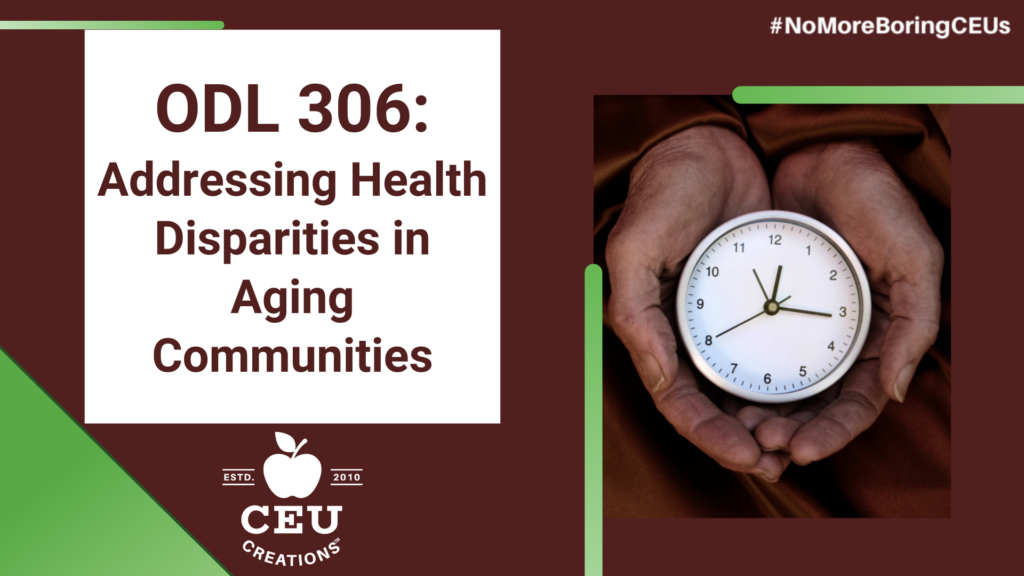
ALL- ODL 306: Addressing Health Disparities in Aging Communities

January 6, 2025 by Nicole Errickson

Created: 10/16/24

Attention New Jersey Social Workers: 

This course is approved for all social workers, including New Jersey. The Board Adopted Amendments: N.J.A.C. 13:44G-6.3, 6.4, and 6.7 Content Areas for Continuing Education Credit on April 15, 2024. This updates the Board’s regulation. This amendment states that  attendance at programs or courses offered by providers approved by the Association of Social Work Boards (ASWB) are now acceptable sources of CE credit. 

At the June 12, 2024 public meeting, the Board voted to allow “any applications submitted, or audits which take place, on or after September 1, 2022” to be able “to submit CE from the sources updated in the new amendment adopted on April 15, 2024.”

For more information please refer to https://www.njconsumeraffairs.gov/sw/Pages/Additional-Information.aspx#CE

Target Audience:

This course is targeted for social workers, case managers, nurses, and counselors.

Overview:

Join Dr. Kalisha Bonds Johnson as she explores the significant health disparities faced by older adults, particularly those from marginalized communities, and discover the emphasis on the role of social determinants of health (SDOH) such as economic stability, healthcare access, and social context. Discover the need for culturally-tailored and adapted interventions that respect individuals’ backgrounds, ensuring more effective, person-centered care is highlighted. The concept of intersectionality is discussed, illustrating how overlapping social identities compound disadvantages in healthcare. Through a case study of an older adult, the presentation demonstrates the practical application of these concepts, while also addressing the ethical responsibility of healthcare professionals to combat disparities by promoting justice, autonomy, and cultural competence in their practice.

Course Objectives:

By the end of the session, the participant will be able to:

  1. Explain and understand health disparities in aging communities by exploring the impact of social determinants of health (SDOH) and their effects on marginalized populations.
  2. Determine culturally-tailored and culturally-adapted interventions to address the unique needs of diverse older adults, ensuring person-centered care that aligns with their cultural backgrounds.
  3. Apply culturally responsive approaches in healthcare settings to promote health equity and improve outcomes for aging adults, while adhering to ethical principles such as justice, autonomy, and beneficence.

Presenter:

Kalisha Bonds Johnson, PhD, RN, PMHNP-BC

Dr. Kalisha Bonds Johnson is an assistant professor at Emory University’s Nell Hodgson Woodruff School of Nursing in Atlanta, Georgia, and a psychiatric mental health nurse practitioner at Emory University’s Integrated Memory Care, a primary care clinic tailored to the care of persons living with dementia and their families. She is also the Principal Investigator of the DECIDE Research Lab. She graduated from The University of Tennessee at Martin with a Bachelor of Science in Nursing, graduated with a Master of Science in Nursing from Vanderbilt University, and graduated with a PhD from Oregon Health & Science University. She completed her postdoctoral training (or training after completing a PhD) at Emory University. Dr. Bonds Johnson’s research focuses on improving health care decision-making processes for Black American persons living with dementia and their family care partners as well as improving the communication between primary care providers and these families. 

1 CREDIT HOUR APPROVED FOR:

Social Workers
ASWB ACE – 1 Ethics CE Credit
New York State Education Department’s State Board for Social Work – 1 Contact Hour
Case Managers
CCMC – 1 Ethics Hour
Nurses
California Board of Registered Nursing – 1 Contact Hour
Counselors – 1 Ethics Hour or 1 Contact Hour*
NBCC ACEP – 1 Contact Hour
New York State Education Department’s State Board for Mental Health Practitioners – 1 Contact Hour

* Some states do not require/accept ethics hours for counselors, for those cases contact hours will be awarded.

Please make sure to check with your own state board to ensure the transferability of CE credit for an asynchronous course. Some state boards may place restrictions regarding the modality of training required for ethics credits to be awarded. If this training indicates ethics credits are available, please verify that your state allows them to be earned through an on-demand course format.

Filed Under: Decommissioned

Power Hour: Grab a Bite, Get Insight – Advance Care Planning for Individuals with Intellectual and Developmental Disabilities (IDD): Where Do We Go From Here?

December 30, 2024 by Jess W

Filed Under: Uncategorized

An In-Depth Overview of Suicide Assessments and Interventions

December 30, 2024 by Jess W

Filed Under: Uncategorized

  • « Previous Page
  • 1
  • …
  • 6
  • 7
  • 8
  • 9
  • 10
  • …
  • 12
  • Next Page »
CEU Creations
  • About Us
  • FAQs
  • Contact & Help

11770 Haynes Bridge Rd
Suite 205-276
Alpharetta, GA 30009
[email protected]

Follow Us:

Facebook Twitter

Accessibility Statement   |   Privacy Policy   |   Cancellation Policy

This material may not be published, rewritten, or redistributed. Copyright © 2026 CEU Creations - All Rights Reserved